
Backcountry cameras
There is a saying among photographers, "the best camera is the one you have with you". This is especially true for backcountry travel, and a corollary is that the best camera is one you can access very quickly. What this means is that there is no "best" camera, the most appropriate will depend on what you want to do with the pictures (or video), what you want to take pictures of, and how much effort you are willing to put into getting a camera into the backcountry and using it there.
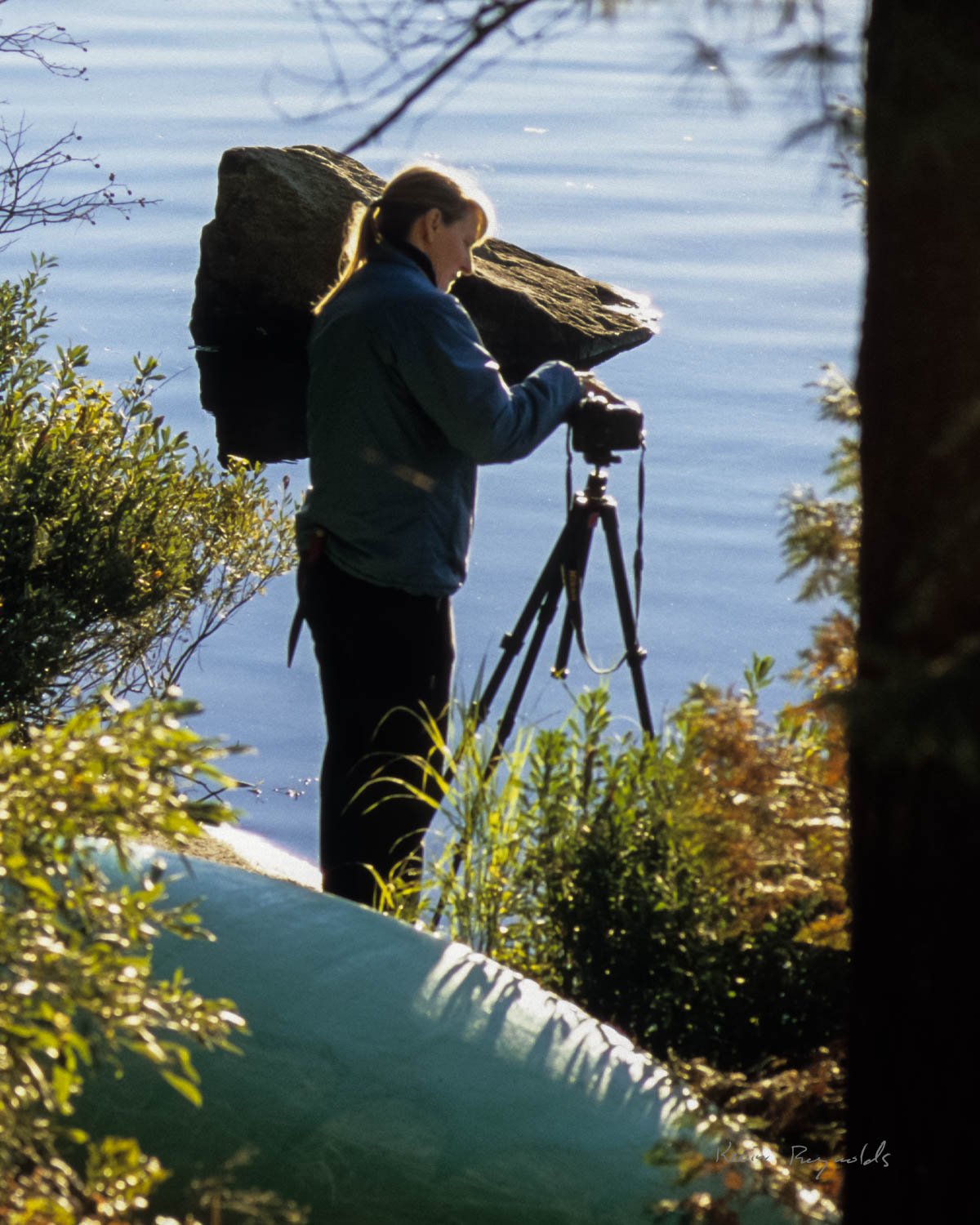
Campsite photography can be slower paced
So here are some key things to think about when deciding on a camera to use when you head out:
what do you plan to do with the pictures? What you need for snapshots for social media is different than for large prints.
what do you want to take pictures of? What you need for pictures of friends is different than for pictures of skittish wildlife.
how much weight and bulk are you willing to carry?
how will you carry the camera and quickly access it?
how will you protect the camera from weather and other hazards?
Starting with your plans for the pictures. If you just plan to use images straight out of the camera to put on social media or make small prints with, then in most cases any modern camera from a phone to a professional ILC (interchangeable lens camera) will take very satisfactory pictures. However, if you want to process the images after taking them and/or make high quality prints then you will be more constrained. In this case there are two factors that may not be obvious which differentiate cameras.
The first of these is sensor size; other things being equal a larger sensor will provide a higher quality and more editable image. There are many sizes of sensors, with the sensors typically used in professional ILCs being more than 30 times the size of the small sensors used in many phones. The large sensors will also perform much better in low light situations.
The second is whether the camera captures "raw" files. These are files that contain the unprocessed digital data output directly from the camera sensor, and which allow much more flexibility for later processing (post-processing done after downloading the image to a computer).
Note that in most cases the number of megapixels so often advertised for cameras is not as important; all cameras today have enough for most purposes.
Next consider what you want to take pictures of. This will impact the type of lens the camera will need. If most of your pictures will be of subjects like friends and landscapes in reasonable light then a camera with a built in lens will likely be fine (e.g. phone, compact camera). However if you want to take pictures of subjects at a distance (wildlife), tiny subjects (macro photos), fast action, night pictures, or other speciallized subjects then you will likely need something more specialized like a "bridge" camera or an ILC.
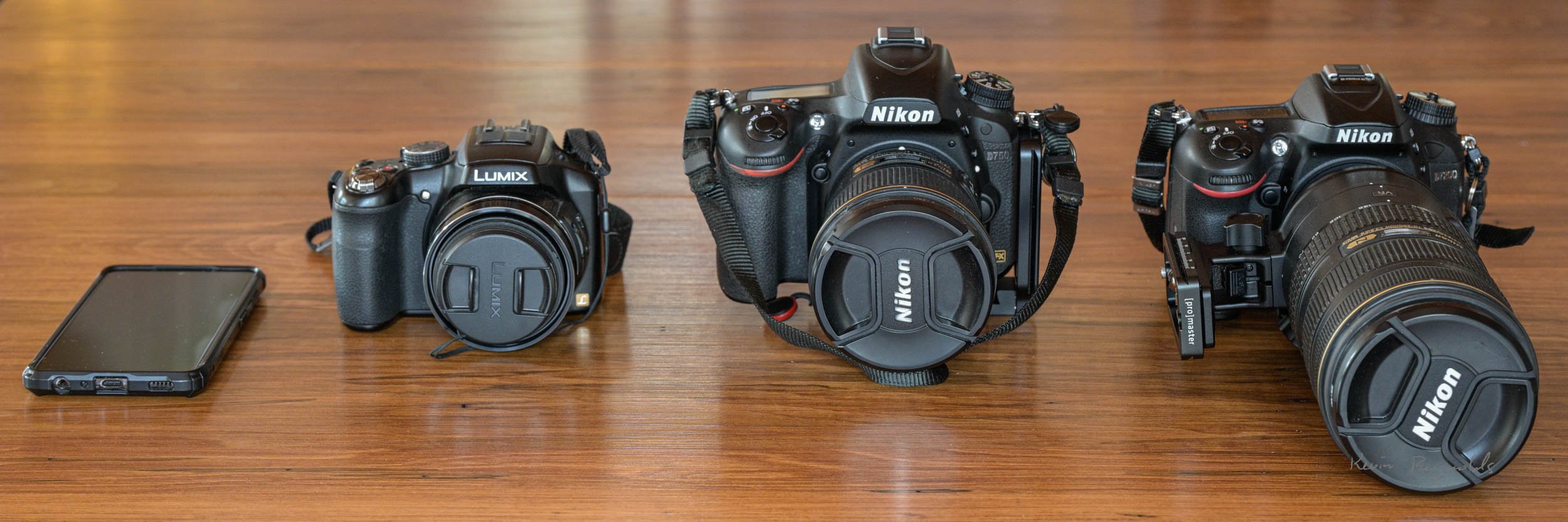
Many size options for a camera
Which brings us to weight and bulk. The possible range is enormous, from a 200g phone that you can put in your pocket to a professional ILC with a professional wildlife telephoto lens that is over half a meter long and weighs 5kg+. The key is to remember that the best camera in the world is no good to you if it is left at home. Unless you really intend to focus on your photography when you are out, size is likely one of the most important considerations for your camera.
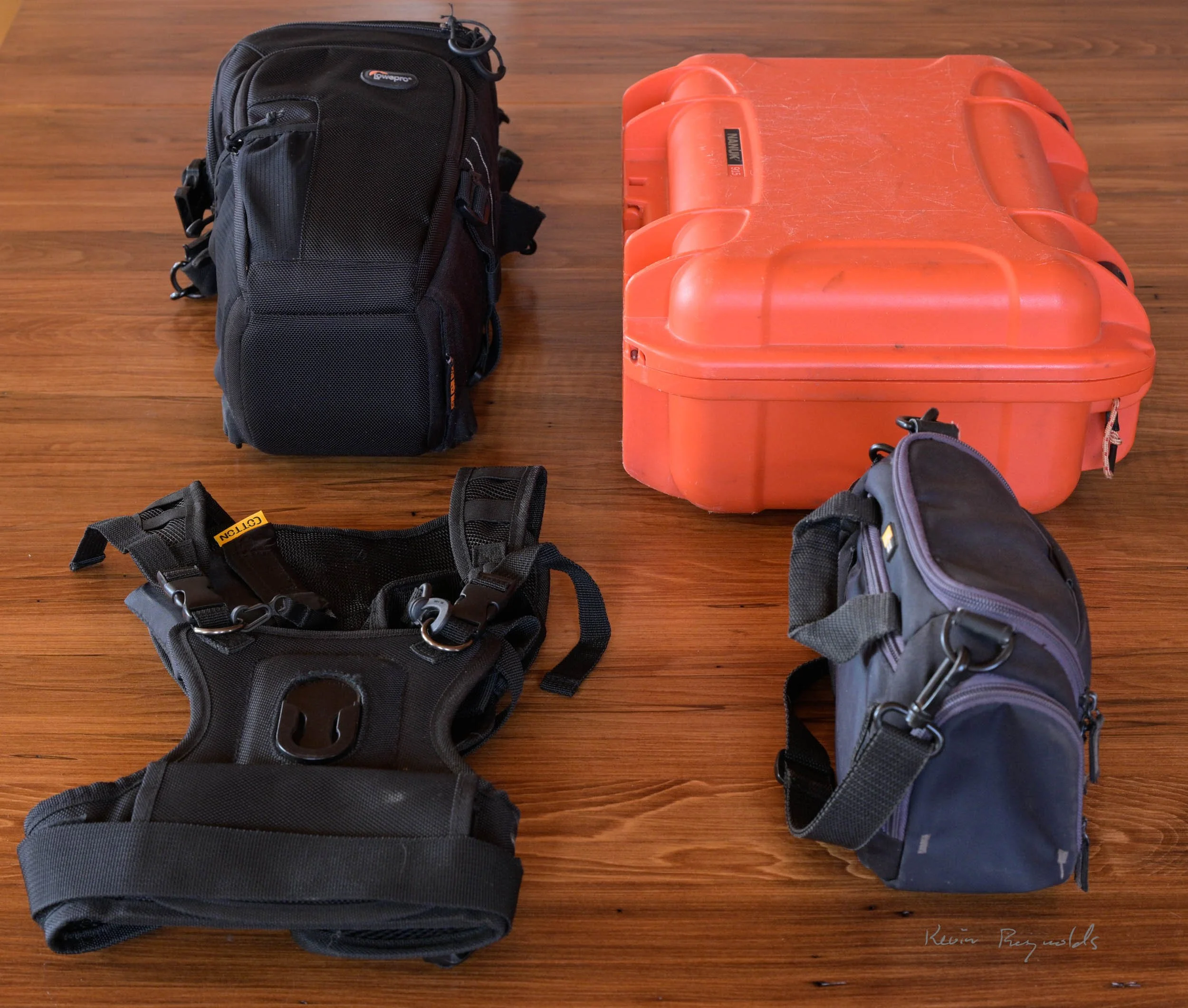
Many ways to carry and protect a camera
Closely tied to camera size is how you will carry and access it. Unless you have a pocketable phone or compact camera this will likely require a dedicated bag or carrying system that lets you get at the camera easily (and you are a better person than I if you can tolerate the strap that comes with the camera for any length of time while hiking). My experience (especially when out with others) is that if it is not easy to get at the camera it won't get used, so stashing it in your backpack is not a great option. The only thing worse than leaving the camera at home is carrying it all day but not using it when you want to!
The final item, protecting your camera, may be covered by your carrying system or may be yet another piece of kit to buy and carry. There are ruggedized compact cameras that are fully waterproof and impact resistant, phones that are moderately waterproof, and higher end ILCs that are significantly weatherproofed but not waterproof. In these cases you may decide that no additional protection is required for your activity. However many midrange cameras are not even weatherproof, weatherproof cameras are not waterproof, waterproof phones and cameras will still sink, .and no camera is truely safe from impacts (they may still work but optical elements can become misaligned). This needs to be considered but shouldn’t prevent you from taking a camera out if you want to, my cameras have experienced everything from whitewater canoeing to thunderstorms to me falling and with the proper cases and bags have never had any problems.
The takeaway from all of this is that you will be best served by being honest with yourself about what you really want the camera for and picking the least complex solution to meet that need. I have fairly high end cameras and lenses, and take them on photography focused outings and on canoe trips (where I don't have to carry them!). However I also use a small bridge camera, a waterproof compact, or my phone on other outings with very satisfactory results for what I wanted that day. Think KISS (keep it simple, stupid)!
I haven't gotten into depth here on any of these issues, but there are many resources on-line and hopefully this post will have helped you understand the questions you will want to answer if you plan to take a camera on your outings.